

• Commercialization of “Biodegradable Resin-Coated Controlled-Release Fertilizer” (CRF) through RDA-Nousbo Collaboration
• Accelerating Carbon Neutrality: Reduces Fertilizer Use by 46.7% and Methane Emissions by 63.9%
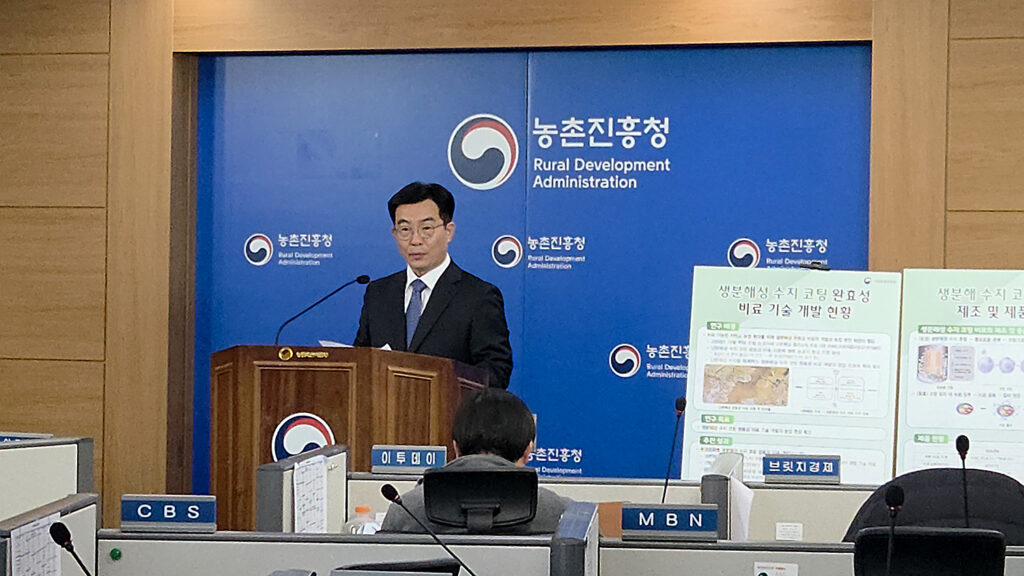
SEJONG, South Korea – On the morning of February 25, the press room of the Ministry of Agriculture, Food and Rural Affairs in Sejong City became the center of attention as a new technology poised to redefine the future of sustainable agriculture was unveiled.
The “Biodegradable Coated Controlled-Release Fertilizer” (CRF) technology, presented by the National Institute of Agricultural Sciences under the Rural Development Administration (RDA), is being hailed as the definitive solution to the chronic issue of plastic residue in farmlands.
Overcoming the Limits of Persistent Plastics through Biodegradation
The core of this breakthrough lies in replacing conventional, non-biodegradable polyethylene coatings with a specialized blend of biodegradable resins (PBS and PLA) that decompose naturally in the soil. While traditional CRFs have been highly valued for reducing labor, they have faced criticism for leaving microplastics in the environment after the nutrients are released.
Through years of joint R&D, the RDA and Nousbo Co., Ltd. have successfully engineered a coating that not only decomposes but also maintains precise “release control,” ensuring nutrients are discharged at a rate that matches the crop’s growth cycle. This public-private partnership is particularly significant as international regulations tighten; for instance, the European Union is set to ban the use of non-biodegradable plastic fertilizers starting in 2028. This innovation positions “K-Agtech” as a leader in global environmental compliance.
Proven Environmental Impact: “Nousbo Hi-Cote” Designated as a High-Quality Fertilizer No. 1
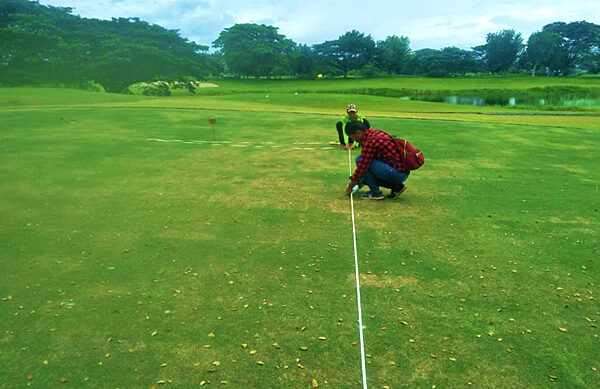
Field trials conducted on rice paddies yielded remarkable data. The application of the biodegradable coated fertilizer resulted in a 46.7% reduction in total fertilizer usage and a 63.9% drop in methane emissions, a primary greenhouse gas in agriculture.
Most notably, the “decomposition rate” has set a new standard. Under composting conditions, 90% of the coating resin decomposes within six months, reverting into water and carbon dioxide, thereby eliminating concerns regarding plastic accumulation in the soil. In recognition of this innovation, ” Nousbo’s Hi-Cote Eco+” has been officially designated by the RDA as the nation’s ” High-Quality Fertilizer No. 1″.
A Value-Driven Choice for Sustainable Farming
While the initial purchase price is approximately 1.5 times higher than conventional fertilizers, the market response has been positive. The higher upfront cost is offset by significant savings in labor and fuel due to fewer applications, combined with the long-term economic value of preserving soil health.
The RDA plans to expand the application of this technology from rice to upland crops, such as peppers and cabbage, with cultivation trials beginning this year. The goal is to distribute the technology to farms nationwide through new technology pilot projects by 2028.
“This technology, developed through the synergy of the public and private sectors, will solve the microplastic crisis in our fields and contribute significantly to achieving carbon neutrality,” stated Seong Je-hoon, Director of the National Institute of Agricultural Sciences. He reaffirmed the institute’s commitment to expanding technologies that foster a sustainable agricultural ecosystem.